
We turn this research into a practical keyword strategy that helps you target the right searches, create more focused content, and build website pages around opportunities that align with your business goals.
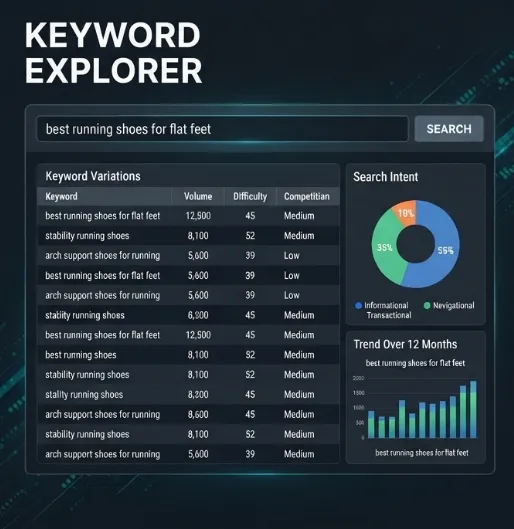
Comprehensive Keyword Research
Search Intent & Competition Analysis
Actionable Keyword Strategy
We analyze keywords from multiple angles, including search intent, competition, relevance, long-tail variations, competitor rankings, and content opportunities. This helps turn raw keyword data into a focused SEO strategy.
Search Intent Analysis
We classify important keywords according to their intent and identify the type of page that best matches the search.
1. Informational searches
2. Commercial investigation
3. Transactional searches
4. Navigational searches
5. Local search intent
This helps prevent situations where a keyword is assigned to a page that does not satisfy what users are actually looking for.
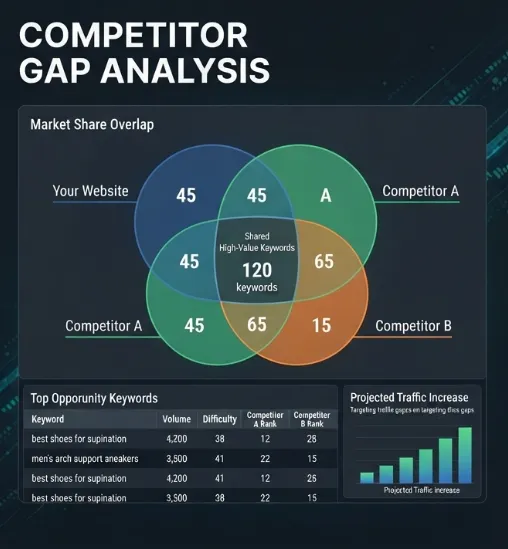
Competitor Keyword Research
Our competitor research can identify:
1. Keywords competitors rank for
2. Important ranking pages
3. Long-tail opportunities
4. Commercial keywords
5. Informational topics
6. Content gaps
Keyword opportunities your website may be missing
The goal is to identify useful opportunities rather than simply copy competitor content.
Keyword Research Services Include
- Primary Keyword Research
- Secondary Keyword Research
- Long-Tail Keyword Research
- Search Intent Analysis
- Keyword Difficulty Analysis
- Search Volume Analysis
- Competitor Keyword Research
- Related Keyword Research
- Semantic Keyword Research
- Commercial Keyword Research
- Informational Keyword Research






Primary & Secondary Keywords
Search Intent Analysis
Long-Tail Keyword Research
Keyword Difficulty & Competition
Competitor Keyword Analysis
Semantic & Related Keywords
Content Gap Analysis
Keyword Clustering & Mapping
Keyword Research for Different Website Types
Our Keyword Research Process
1. Understand Your Business
2. Analyze Your Search Market
3. Research Keywords
4. Analyze Search Intent
5. Analyze Competitors
6. Cluster Related Keywords
7. Map Keywords to Pages
8. Prioritize Opportunities
Search Volume vs Keyword Value
| Keyword Factor | What It Tells You | Why It Matters |
| Search Volume | How often people search | Shows potential search demand |
| Relevance | How closely the keyword matches your business | Helps attract the right audience |
| Search Intent | What users want from the search | Helps select the correct page type |
| Keyword Difficulty | How competitive the keyword may be | Helps assess ranking challenges |
| Business Value | Potential value to your business | Connects SEO with business goals |
| SERP Competition | What currently ranks | Helps evaluate the search landscape |
| Long-Tail Potential | More specific searches available | Can uncover targeted opportunities |
Why Choose Technforbes for Keyword Research?
Business-Focused Research
Search Intent Analysis
Competitor Insights
Organized Keyword Data
Practical SEO Recommendations
Frequently Asked Questions
Keyword research is the process of finding and analyzing the search terms people use in search engines. It helps identify relevant opportunities for website pages and content.
No. Search volume is only one factor. We also consider relevance, search intent, competition, business value, and long-tail opportunities.
Yes. We can analyze your existing pages and keyword performance to identify gaps and opportunities for improvement.
Yes. Keyword research can reveal topics, questions, long-tail searches, and related terms that can be used to create a structured content strategy.
Keyword research helps you understand what your audience searches for and allows you to build content and pages around relevant search intent.
Yes. Competitor keyword research can identify relevant keywords, ranking pages, content gaps, and potential search opportunities.
Yes. We can map target keywords to specific website pages to create a clearer site-wide SEO structure and reduce keyword overlap.